Showing posts with label 1984. Show all posts
Wednesday, June 19, 2013
Friend, Supergirl from Supergirl (1984)
Supergirl: You have no friends, Selena. You treat everyone as if they were put on this Earth to serve you.
Selena: More or less, I think they were. You included.
- Helen Slater as Supergirl (Kara Zor-El) and Faye Dunaway as Selena from Supergirl (1984)
Saturday, June 15, 2013
Superhero, Supergirl from Supergirl (1984)
Supergirl: Who are you?
Selena: I am Selena, Diodenes of Catania, Priestess of Sekhnet. I am the Ultimate Siren of Endor. And you, little lady, are trespassing on private property.
Selena: [points at Ethan] She means him.
Supergirl: I am Kara of Argo City, daughter of Alura and Zor-El, and I don't scare easily.
- Helen Slater as Supergirl (Kara Zor-El) from Supergirl (1984)
Wednesday, September 21, 2005
AFI #037 Arnold Schwarzenegger as The Terminator from The Terminator (1984)

The Terminator: I'm a friend of Sarah Connor. I was told she was here. Could I see her please?
Desk Sergeant: No, you can't see her. She's making a statement.
The Terminator: Where is she?
Desk Sergeant: It may take a while. Want to wait? There's a bench over there.
The Terminator: [looks around, examining the structural integrity of the room, then looks back at him] I'll be back.
- Arnold Schwarzenegger as The Terminator from The Terminator (1984)
The bolded line is ranked #37 in the American Film Institute's list of the top 100 movie quotations in American cinema.
The character returns by driving a car through the front door. Schwarzenegger has been quoted that he hadn't thought much about the line when filming the movie. James Cameron notes in the DVD features that he expected the line to only get a laugh upon repeat viewings when what the character means is known, and was surprised to see it get a big reaction from first-time audiences who had quickly come to understand the character and immediately anticipated the outrageous violence the nonchalant line signifies. In the novelization of the film script, titled The Terminator by Shaun Hutson the Terminator says "I'll come back," rather than "I'll be back," on page 117. ISBN 0-352-31645-4.
http://en.wikipedia.org/wiki/I%27ll_be_back
Sunday, March 4, 1984
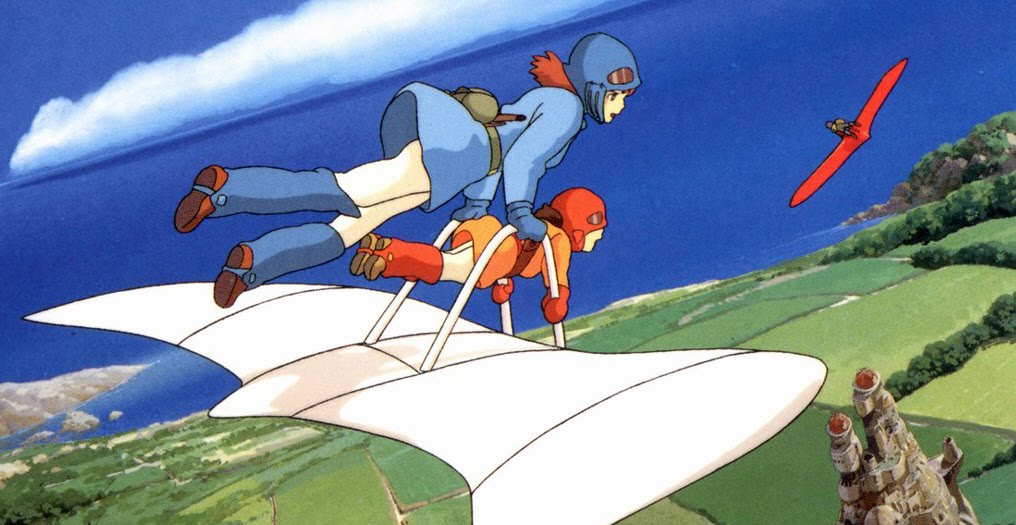
Nausicaä of the Valley of the Wind (1984)
Alternative titles:
風の谷のナウシカ, Kaze no Tani no Naushika, Warriors of the Wind
Directed by: Hayao Miyazaki
Studio: Topcraft
Distributed by: Toei Company
Release date(s): March 4, 1984 (Japan), June 1985 (Warriors of the Wind, North America), February 22, 2005 (uncut re-release, North America)
Rating: MPAA: PG (Parental Guidance Suggested)
Nausicaä of the Valley of the Wind (風の谷のナウシカ, Kaze no Tani no Naushika) is a 1984 post-apocalyptic Japanese anime film, written and directed by Hayao Miyazaki, based on his manga of the same name. The film has environmentalist undertones and was presented by the World Wide Fund for Nature when it was released in 1984. While created before Studio Ghibli was founded, the film is considered to be the beginning of the studio, and is often included as part of the Studio's works, including the Studio Ghibli Collection DVDs. Among its numerous awards, it won the Animage Anime Grand Prix prize in 1984.
Plot
The story takes place 1,000 years after the "Seven Days of Fire", an event which destroyed human civilization and most of the Earth's original ecosystem. Scattered human settlements survive, isolated from one another by the Toxic jungle, a forest of giant plants and fungi swarming with giant insects, which seem to come together only to wage war. Everything in the Toxic Jungle including the air is lethally toxic.
Nausicaä is a charismatic young princess of the peaceful Valley of the Wind. Although a skillful fighter, Nausicaä is humane and peace-loving. She has an unusual gift for communicating with the giant insects (particularly with the Ohmu, gigantic, armored, caterpillar- or isopod-like insects who are the most intelligent creatures in the Toxic Jungle.) She is also noted for her empathy toward animals, humans, and other beings. An intelligent girl, and inspired by the Valley's Lord Yupa, a wandering warrior possessed of great wisdom, Nausicaä frequently explores the Toxic Jungle and conducts scientific experiments in an attempt to define the true nature and origins of the toxic world in which she lives. Her explorations are facilitated by her skill at "windriding": flying with an advanced jet assisted glider craft. Yupa is searching for the mythological man in blue who, according to the legend, will appear surrounded by a sea of gold and reunite the people and nature.
One day, an airship crashes onto the cliffs near the Valley of the Wind. Nausicaä tries to rescue a shackled girl of her age from the burning wreck, but the girl dies after revealing that she is Princess Lastelle from the kingdom Pejite and that the cargo of the airship must be destroyed. The airship is from Tolmekia and the cargo turns out to be the embryo of a Giant Warrior, one of the lethal, giant creatures used in the ancient war.
It is later revealed that the Warrior embryo was unearthed by Pejite, but it was stolen by the more powerful state of Tolmekia. While transporting the Warrior - along with Lastelle as a hostage - back to their realm, the Tolmekians were attacked by insects and later crash-landed in the Valley. The next day, the Tolmekians, under the leadership of princess Kushana, invade the Valley to kill the Valley king and to secure and revive the Warrior. Kushana explains that the Giant Warrior will be used to burn the Toxic Jungle even though Obaba, a blind elder Valley woman, warns that attempting that will only anger the Ohmu and lead to more deaths and turn the valley into part of the jungle.
Kushana attempts to return to Tolmekia, with Nausicaä and several others as hostages. Before their departure, Nausicaä reveals to Yupa a hidden garden of jungle plants which are not toxic because they are growing in sand and water from a deep, untainted well. Nausicaä explains that the jungle is only toxic due to the toxic soil that covers the surface of the earth, even in the Valley; she has been trying to find the cause and a possible cure for her people, including her now-dead father. Since she has to depart, however, she has shut down the water flows which keep the plants alive.
The airships are attacked by a Pejitan gunship and several of the ships are destroyed. Nausicaä and another hostage, on board of one of the burning cargo ships still mid-air, make their way to a gunship that the Tolmekians took, but before they can leave, Kushana joins them. They are forced to make an emergency landing in the jungle. There, Nausicaä communicates with several Ohmus and discovers that the pilot of the Pejitan gunship is still alive. With the help of her glider, Nausicaä rescues the pilot from a swarm of enraged insects. However Nausicaä, the Pejitan pilot and the glider are swallowed by quicksand and end up in a strange, non-toxic world that is below the jungle. Nausicaä realizes the plants in the jungle purify the polluted topsoil, producing clean water and sand which remains hidden in the underground world. The pilot reveals that he is Asbel of Pejite, the twin brother of princess Lastelle.
Meanwhile, the people of the Valley of the Wind request weapons from the occupying Tolmekians to destroy toxic spores, which have infested the valley's forest. Enraged that they have had to burn their forest because of the Tolmekians, the citizens revolt, attacking the Tolmekians who have taken over the castle. The Tolmekians counter, forcing the valley residents to flee to an ancient ship on the shore of the acid lake, with the Tolmekians in pursuit.
Nausicaä and Asbel return to Pejite, which is devastated after the Pejite people lured the insects from the Sea of Decay into their own town in order to kill the occupying Tolmekian forces. The Pejite people, now seemingly surviving only on board of a single airship, reveal that they will do the same thing to the Valley of the Wind to recapture the Warrior, and use it to burn the jungle. To prevent Nausicaä from alerting the Tolmekians, they capture her, but she escapes with the help of Asbel and his mother. With her glider, she heads to the Valley, but along the way she encounters an enormous herd of enraged Ohmus who are following an injured baby Ohmu being used by the Pejite people to lure the Ohmus to the Valley. Nausicaä releases the baby Ohmu and gains its trust.
Meanwhile, the Tolmekians attempt to stop the herd with their armored vehicles but fail. Kushana, who had escaped from the hostages, arrives with the Giant Warrior to stop the Ohmu herd. The Warrior fires several beams from its mouth which on impact cause massive explosions, but this only serves to enrage the insects more. The Warrior attempts to continue fighting the Ohmu, but because it was awakened before being fully grown it collapses and dies. However, Nausicaä and the baby Ohmu are finally able to stop the Ohmu herd, but she is mortally wounded in the process. In front of the Valley people and the Tolmekian forces, the Ohmus use their gold-colored tentacles to heal Nausicaä's injuries. Nausicaä's dress is then seen by all her village as now being of blue color, stained by the blood of the baby Ohmu she rescued; thus Nausicaä turns out to be the mythological figure in blue mentioned in the beginning. The film ends with scenes of the future, where people and insects live in peace with each other. After the credits, a scene from under the Toxic Jungle shows a new, non-toxic plant growing, showing a possible new forest.
Production
Nausicaä was produced with animators hired for the one film and paid per frame. One notable animator was Hideaki Anno, who later produced Neon Genesis Evangelion. Anno was assigned to draw the challenging God Warrior's attack sequence, which according to Toshio Suzuki is a "high point in the film".
Other media
Manga
Miyazaki's manga version of Nausicaä was written over a period of 12 years, with breaks taken to work on Studio Ghibli films. Serialized in Tokuma Shoten's Animage magazine, the first chapter was published in February 1982, and the last chapter in March 1994. As can be expected, the story of the manga is far more complex than that of the film. The tale depicted in the film roughly corresponds to only the first quarter of the manga (which is all that had been written at the time the film was produced), with significant differences in plot.
In addition to the plot, there are other significant differences in the story – the characters are more developed and the environmentalist tone is more sophisticated, echoed in the complex worldview of Princess Mononoke. Nausicaä herself is portrayed as being much more potent, with abilities that are not always explained.
The Nausicaä manga is published in English by VIZ Media. Earlier editions of the English manga and fan translations often used the title Nausicaä of the Valley of Wind, omitting the definite article.
http://en.wikipedia.org/wiki/Nausica%C3%A4_of_the_Valley_of_the_Wind_(film)
Japanese-language films | 1984 films | Adventure anime and manga | Anime films | Anime of 1984 | Doomsday films | Drama anime and manga | Fantasy adventure films | Fantasy anime and manga | Films directed by Hayao Miyazaki | Films distributed by Disney | Anime distributed by Madman Entertainment | Post-apocalyptic films | Science fiction anime and manga | Studio Ghibli | Viz Media anime | Aviation films | Environmental films
Alternative titles:
風の谷のナウシカ, Kaze no Tani no Naushika, Warriors of the Wind
Directed by: Hayao Miyazaki
Studio: Topcraft
Distributed by: Toei Company
Release date(s): March 4, 1984 (Japan), June 1985 (Warriors of the Wind, North America), February 22, 2005 (uncut re-release, North America)
Rating: MPAA: PG (Parental Guidance Suggested)
Nausicaä of the Valley of the Wind (風の谷のナウシカ, Kaze no Tani no Naushika) is a 1984 post-apocalyptic Japanese anime film, written and directed by Hayao Miyazaki, based on his manga of the same name. The film has environmentalist undertones and was presented by the World Wide Fund for Nature when it was released in 1984. While created before Studio Ghibli was founded, the film is considered to be the beginning of the studio, and is often included as part of the Studio's works, including the Studio Ghibli Collection DVDs. Among its numerous awards, it won the Animage Anime Grand Prix prize in 1984.
Plot
The story takes place 1,000 years after the "Seven Days of Fire", an event which destroyed human civilization and most of the Earth's original ecosystem. Scattered human settlements survive, isolated from one another by the Toxic jungle, a forest of giant plants and fungi swarming with giant insects, which seem to come together only to wage war. Everything in the Toxic Jungle including the air is lethally toxic.
Nausicaä is a charismatic young princess of the peaceful Valley of the Wind. Although a skillful fighter, Nausicaä is humane and peace-loving. She has an unusual gift for communicating with the giant insects (particularly with the Ohmu, gigantic, armored, caterpillar- or isopod-like insects who are the most intelligent creatures in the Toxic Jungle.) She is also noted for her empathy toward animals, humans, and other beings. An intelligent girl, and inspired by the Valley's Lord Yupa, a wandering warrior possessed of great wisdom, Nausicaä frequently explores the Toxic Jungle and conducts scientific experiments in an attempt to define the true nature and origins of the toxic world in which she lives. Her explorations are facilitated by her skill at "windriding": flying with an advanced jet assisted glider craft. Yupa is searching for the mythological man in blue who, according to the legend, will appear surrounded by a sea of gold and reunite the people and nature.
One day, an airship crashes onto the cliffs near the Valley of the Wind. Nausicaä tries to rescue a shackled girl of her age from the burning wreck, but the girl dies after revealing that she is Princess Lastelle from the kingdom Pejite and that the cargo of the airship must be destroyed. The airship is from Tolmekia and the cargo turns out to be the embryo of a Giant Warrior, one of the lethal, giant creatures used in the ancient war.
It is later revealed that the Warrior embryo was unearthed by Pejite, but it was stolen by the more powerful state of Tolmekia. While transporting the Warrior - along with Lastelle as a hostage - back to their realm, the Tolmekians were attacked by insects and later crash-landed in the Valley. The next day, the Tolmekians, under the leadership of princess Kushana, invade the Valley to kill the Valley king and to secure and revive the Warrior. Kushana explains that the Giant Warrior will be used to burn the Toxic Jungle even though Obaba, a blind elder Valley woman, warns that attempting that will only anger the Ohmu and lead to more deaths and turn the valley into part of the jungle.
Kushana attempts to return to Tolmekia, with Nausicaä and several others as hostages. Before their departure, Nausicaä reveals to Yupa a hidden garden of jungle plants which are not toxic because they are growing in sand and water from a deep, untainted well. Nausicaä explains that the jungle is only toxic due to the toxic soil that covers the surface of the earth, even in the Valley; she has been trying to find the cause and a possible cure for her people, including her now-dead father. Since she has to depart, however, she has shut down the water flows which keep the plants alive.
The airships are attacked by a Pejitan gunship and several of the ships are destroyed. Nausicaä and another hostage, on board of one of the burning cargo ships still mid-air, make their way to a gunship that the Tolmekians took, but before they can leave, Kushana joins them. They are forced to make an emergency landing in the jungle. There, Nausicaä communicates with several Ohmus and discovers that the pilot of the Pejitan gunship is still alive. With the help of her glider, Nausicaä rescues the pilot from a swarm of enraged insects. However Nausicaä, the Pejitan pilot and the glider are swallowed by quicksand and end up in a strange, non-toxic world that is below the jungle. Nausicaä realizes the plants in the jungle purify the polluted topsoil, producing clean water and sand which remains hidden in the underground world. The pilot reveals that he is Asbel of Pejite, the twin brother of princess Lastelle.
Meanwhile, the people of the Valley of the Wind request weapons from the occupying Tolmekians to destroy toxic spores, which have infested the valley's forest. Enraged that they have had to burn their forest because of the Tolmekians, the citizens revolt, attacking the Tolmekians who have taken over the castle. The Tolmekians counter, forcing the valley residents to flee to an ancient ship on the shore of the acid lake, with the Tolmekians in pursuit.
Nausicaä and Asbel return to Pejite, which is devastated after the Pejite people lured the insects from the Sea of Decay into their own town in order to kill the occupying Tolmekian forces. The Pejite people, now seemingly surviving only on board of a single airship, reveal that they will do the same thing to the Valley of the Wind to recapture the Warrior, and use it to burn the jungle. To prevent Nausicaä from alerting the Tolmekians, they capture her, but she escapes with the help of Asbel and his mother. With her glider, she heads to the Valley, but along the way she encounters an enormous herd of enraged Ohmus who are following an injured baby Ohmu being used by the Pejite people to lure the Ohmus to the Valley. Nausicaä releases the baby Ohmu and gains its trust.
Meanwhile, the Tolmekians attempt to stop the herd with their armored vehicles but fail. Kushana, who had escaped from the hostages, arrives with the Giant Warrior to stop the Ohmu herd. The Warrior fires several beams from its mouth which on impact cause massive explosions, but this only serves to enrage the insects more. The Warrior attempts to continue fighting the Ohmu, but because it was awakened before being fully grown it collapses and dies. However, Nausicaä and the baby Ohmu are finally able to stop the Ohmu herd, but she is mortally wounded in the process. In front of the Valley people and the Tolmekian forces, the Ohmus use their gold-colored tentacles to heal Nausicaä's injuries. Nausicaä's dress is then seen by all her village as now being of blue color, stained by the blood of the baby Ohmu she rescued; thus Nausicaä turns out to be the mythological figure in blue mentioned in the beginning. The film ends with scenes of the future, where people and insects live in peace with each other. After the credits, a scene from under the Toxic Jungle shows a new, non-toxic plant growing, showing a possible new forest.
Production
Nausicaä was produced with animators hired for the one film and paid per frame. One notable animator was Hideaki Anno, who later produced Neon Genesis Evangelion. Anno was assigned to draw the challenging God Warrior's attack sequence, which according to Toshio Suzuki is a "high point in the film".
Other media
Manga
Miyazaki's manga version of Nausicaä was written over a period of 12 years, with breaks taken to work on Studio Ghibli films. Serialized in Tokuma Shoten's Animage magazine, the first chapter was published in February 1982, and the last chapter in March 1994. As can be expected, the story of the manga is far more complex than that of the film. The tale depicted in the film roughly corresponds to only the first quarter of the manga (which is all that had been written at the time the film was produced), with significant differences in plot.
In addition to the plot, there are other significant differences in the story – the characters are more developed and the environmentalist tone is more sophisticated, echoed in the complex worldview of Princess Mononoke. Nausicaä herself is portrayed as being much more potent, with abilities that are not always explained.
The Nausicaä manga is published in English by VIZ Media. Earlier editions of the English manga and fan translations often used the title Nausicaä of the Valley of Wind, omitting the definite article.
http://en.wikipedia.org/wiki/Nausica%C3%A4_of_the_Valley_of_the_Wind_(film)
Japanese-language films | 1984 films | Adventure anime and manga | Anime films | Anime of 1984 | Doomsday films | Drama anime and manga | Fantasy adventure films | Fantasy anime and manga | Films directed by Hayao Miyazaki | Films distributed by Disney | Anime distributed by Madman Entertainment | Post-apocalyptic films | Science fiction anime and manga | Studio Ghibli | Viz Media anime | Aviation films | Environmental films
Sunday, October 3, 1982
Macross (1982~)
Macross
Genre: Military Science Fiction, mecha anime, Real Robot, Space Opera
Macross (マクロス, Makurosu) is a long-running series of science fiction Mecha anime, created by Shōji Kawamori of Studio Nue in 1982. The franchise features a fictional history of Earth/Humanity after the year 1999. It consists of three TV series, four movies, six OVAs, one light novel and five manga series, all sponsored by Big West Advertising.
Within the series, the term Macross is used to denote the main capital ship. This theme began in the original Macross, the SDF-1 Macross.
Overtechnology refers to the scientific advances discovered in an alien starship (Alien Star Ship - One later renamed Super Dimension Fortress - One Macross) that crashed on South Ataria island. With this technology, Earth was able to reverse engineer the technology to create mechas (variable fighters and destroids), a faster-than-light drive Space Fold for starships and other advanced technologies, which show up throughout the series.
Chronology
| Chronology | Title | Release Dates | Work | Ep |
| 2008 | Macross Zero "Macross 20th Anniversary". Original '82 TV series' prequel. | 2002/12 -2004/10 | OVA | 5 |
| 2009 -2012 | The Super Dimension Fortress Macross Original work adapted by Harmony Gold to become Robotech: The Macross Saga in 1985. | 1982/10 -1983/06 | TV | 36 |
| 2009 -2012 | Macross: The First Comic format alternate telling of the events in The Super Dimension Fortress Macross serialized in Shōnen Ace magazine. | 2009 | Manga | NA |
| 2009 -2012 /2031 story within a story (in Macross 7) | The Super Dimension Fortress Macross: Do You Remember Love? Alternate telling of the events in The Super Dimension Fortress Macross, specifically episodes 2 through 27. | 1984/07 | Movie | 1 |
| 2012 | The Super Dimension Fortress Macross: Flash Back 2012 Epilogue of the Movie, segments were added in the movie's definitive "Perfect Edition". | 1987/06 | OVA | 1 |
| 2040 | Macross Plus TV series' sequel OVA created by Studio Nue. A side-story. | 1984/08 -1995/06 | OVA | 4 |
| 2040 | Macross Plus: International Version Alternative OVA version with English cast and songs. | 1995/03 -1995/07 | OVA | 4 |
| 2040 | Macross Plus: Movie Alternative Movie version with different editing and additional scenes. | 1995/09 | Movie | 1 |
| 2045 -2046 | Macross 7 TV series sequel to Macross Plus. First of the sequels to touch upon the metaplot. Features a new cast of characters, and only three returning characters from the original series. | 1994/10 -1995/09 | TV | 49 |
| 2046 | Macross 7: Trash Comic side-story first serialized in Shōnen Ace magazine then released as volumes. | 1994/10 -2001/05 | Manga | 8 |
| 2046 | Macross 7 The Movie: The Galaxy Is Calling Me! | 1995/09 | Movie | 1 |
| 2046 | Macross 7: Encore Three '94 TV series additional episodes. | 1995/12 | OVA | 3 |
| 2047 | Macross Dynamite 7 "Macross 15th Anniversary" '94 TV series' sequel. | 1997/12 -1998/08 | OVA | 4 |
| 2059 | Macross Frontier Manga '94 TV series' sequel. Comic format telling of the events in Macross Frontier first serialized in Shōnen Ace magazine. | 2007/12 | Manga | NA |
| 2059 | Macross Frontier (Deculture Edition) "Macross 25th Anniversary" '94 TV series' sequel pilot episode. | 2007/12 | TV | 1 |
| 2059 | Macross Frontier '94 TV series' sequel. | 2008/04 | TV | 25 |
| 2059 | Macross Frontier The Movie: The False Diva 2008 TV series' theatrical movie adaptation. | 2009/11 | Movie | 1 |
| 2059 | Macross Frontier Movie: The Wings of Goodbye 2009 Theatrical movie sequel. | TBA | Movie | 1 |
| 2092 "parallel" world alternate continuity | The Super Dimension Fortress Macross II: Lovers, Again "Macross 10th Anniversary" TV series' sequel OVA created without Studio Nue. | 1992/05 -1992/11 | OVA | 6 |
A feature film, subtitled Do You Remember Love? (愛・おぼえていますか Ai Oboete Imasu ka), was released in 1984, with a condensed version of the storyline and cutting-edge animation. This movie was later described as a "historical drama" movie within the Macross universe (similar to World War II films in the real world). In Macross Plus and Macross 7, it is revealed that there was a movie produced after Space War I (the original Earth-Zentradi conflict). Kawamori described the relation between the two depictions of Space War I: "The real Macross is out there, somewhere. If I tell the story in the length of a TV series, it looks one way, and if I tell it as a movie-length story, it's organized another way." (A edited, English-dubbed version of the feature was also released to video as Clash of the Bionoids.)
Macross II, the only animated project without Studio Nue's direct involvement, was declared a parallel-world story by Studio Nue.
In March 2007, Studio Victor placed a casting call for a voice actress to play the heroine, Ranka Lee, in a then untitled new Macross series. 18 year old Nakajima Megumi was selected in the nationwide singing and acting audition for the role of Ranka Lee in Japan. The project was given the tentative title of Macross 25. Later, as part of the 25th anniversary concert, a trailer was shown that revealed the new tentative title of Macross F (Frontier). During the concert, Kawamori Shoji mentioned that the timeframe of Macross Frontier was about 2070 A.D. Kawamori also announced that Yoko Kanno would be the music co-composer of the new Macross series. According to Newtype Magazine, this new series were supposed to take place in a school. The pilot episode aired in December 23, 2007. The new series were finally set in the year 2059 A.D. and took place in a new Macross Colony Fleet called "Macross Frontier". The new show was produced by Satelight and its episodes began their regular broadcast on April 4, 2008, in MBS channel of Japan. The final episode aired on September 25, 2008, what brought the series to a total of 25 episodes. A Macross Frontier Movie Edition was announced just after the ending of the new TV animated series.
Source
Anime series | Anime films | Anime OVAs | Macross | Space opera
Subscribe to:
Posts (Atom)